Casino Tables in Fiction: Atmosphere, Not Instruction
Read casino scenes for character, status and suspense: a focused way to see how gestures, setting and pacing shape the story’s tension.
The most common mistake in reading a casino scene is to focus on whether the play looks accurate. That costs the reader the more revealing question: why has the writer brought these people to this table? In fiction, a wager can be less about the game than about who wants to be seen, who is hiding something and who controls the room.
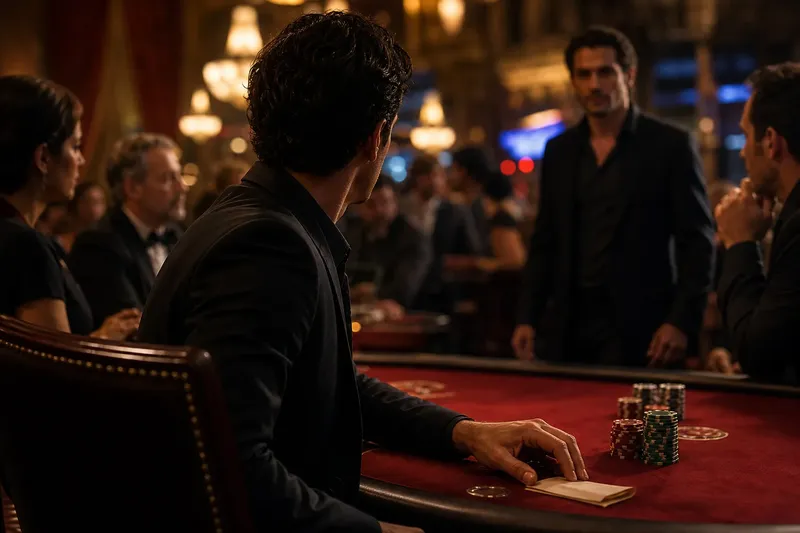
A chip held above the felt, a dealer’s measured call, a glance towards the door: each detail can load an ordinary pause with meaning. Read them as choices in a crafted scene, then ask how they shape the people around the table.
Casino tables in fiction stage social contests
Start with the character’s immediate aim. They may want to impress a rival, delay an answer, conceal fear or reclaim attention. The game gives that contest a visible structure, but the emotional stakes often sit elsewhere.
Separate a character’s performance from the story’s view of it. Someone who announces a bold move may be trying to look fearless; another character’s reaction, or the narrator’s dry detail, can reveal the strain beneath that pose.
- Notice who sets the pace. If the dealer’s calls dominate the scene, the character may be trapped in a rhythm they cannot control; if the character interrupts or stalls, the story may be showing a bid for power.
- Track where attention goes. If a character watches the door rather than the table, look for unease or a desire to leave; if their gaze stays fixed on a rival, read the moment as a contest between them.
- Ask what the table makes possible. If it brings estranged people together, focus on their exchange; if it gives someone an audience, watch how they perform for the room.
- Listen for who gets heard. If one voice goes unchallenged, the scene may grant that person status; if another is repeatedly interrupted, the imbalance itself may be part of the conflict.
- Watch for repeated objects or gestures. If a character keeps straightening chips or smoothing a sleeve, consider a need for order; if the action changes after a new arrival, connect that shift to the relationship.
- Notice who waits. If one character must wait for permission or a turn to speak, consider how the scene limits their agency; if they choose to wait, ask what they gain by holding back.
These observations work like reading the arrangement of chairs at a family dinner: position can signal who belongs, who has influence and who feels out of place. The table’s social choreography can matter more than its mechanics.
Setting details make pressure visible
Fiction often builds atmosphere from selective physical details: worn felt, bright overhead lights, the clack of chips or a crowded rail. A clean, orderly table can make a character’s agitation stand out; a packed room can make a private conversation feel exposed.
Notice what the narration returns to. A recurring sound may mark the scene’s rhythm, while a detail that appears only when a character arrives can make that entrance feel disruptive. The detail need not carry a fixed meaning; its force comes from where the writer places it.
Space also distributes status. Who has a clear view, who stands at the edge, and who can speak without interruption? Those positions let a story show power without explaining it outright.
Gestures belong to the character who makes them
A hand pushing chips forward might express bravado, impatience or an effort to look composed. Context decides which reading fits: the character’s earlier behaviour, the response from others and the narration’s tone all matter. Treating the gesture as a universal signal flattens the scene.
Dialogue works the same way. A confident claim about a tactic may be a bluff, a mistaken belief or a line designed to unsettle someone. Ask who benefits from the claim and whether the story supports or undercuts it.
Say Mara arrives at a crowded roulette table and keeps glancing towards the exit while telling her friend she feels at ease. She stays beside the table, repeats the reassuring line and looks back at the door whenever the crowd presses closer. The observable contrast—calm words, restless attention—invites a reading of unease or hesitation, while leaving the exact cause open.
Writers use game details to control the scene
A writer may skip several turns, compress a deal into a few lines or bring a result forward at the moment a relationship changes. That shorthand directs attention towards the reaction: a boast, a silence, a sudden alliance or a loss of composure.
Look at what the scene lingers over. If it spends more time on a character’s face than on the sequence of play, the emotional consequence is probably the point. If a term or rule appears only once, it may be there to lend texture rather than carry the scene’s meaning.
To read for craft, note what information the writer withholds and when it arrives. A delayed reveal can create suspense; a quick cut can make an outcome feel abrupt or inevitable. The question is not whether the passage offers a usable system, but how its timing steers the reader’s attention.
How can you read the scene’s social meaning?
What makes a casino scene feel tense?
Tension often comes from unequal knowledge, a visible audience or a decision that cannot be taken back within the scene. Look for pauses, interrupted speech and changes in who watches whom.
How can setting reveal status?
Notice who occupies the centre, who gets a clear view and who is left waiting at the edge. The scene may use those positions to show access or exclusion before anyone names it.
Why do writers return to a small gesture?
Repetition gives a habit new weight as circumstances change. A character aligning chips at first may seem composed, then look increasingly strained when the same action becomes hurried.
When is the game itself central to the scene?
It is central when the sequence of play shapes the choices, relationships or consequences the story develops. If the game details recede while status, secrecy or fear takes over, the table is doing more symbolic work.
Follow the scene’s strongest signals
Imagine a fictional scene in which Elias, a reserved guest at a crowded card table, places a folded note beside his chips, then turns his chair towards a former friend entering the room. He says nothing about the note; instead, he makes space beside him and waits for the friend to sit. The visible result is a shift from private preparation to an offered conversation, so a reader can reasonably focus on reconciliation or an unfinished secret without deciding what the note contains.
When reading casino tables in fiction, keep an eye on changes: who begins speaking, who stops watching the game, and which object suddenly matters. Those shifts are often the scene’s clearest clues to what the table means for its characters.