Why Casino Near Misses Feel Like Personal Judgements
Casino near misses can make a loss feel personal. Learn to separate the game’s stated result from its dramatic display and choose your next move calmly.
The common mistake with a casino near miss is to treat an almost-win as a message about your judgement. Two matching symbols and a third just out of place can make a loss feel unfinished, which may prompt another play even when you had no independent reason to continue.
Casino near misses make a loss feel personal
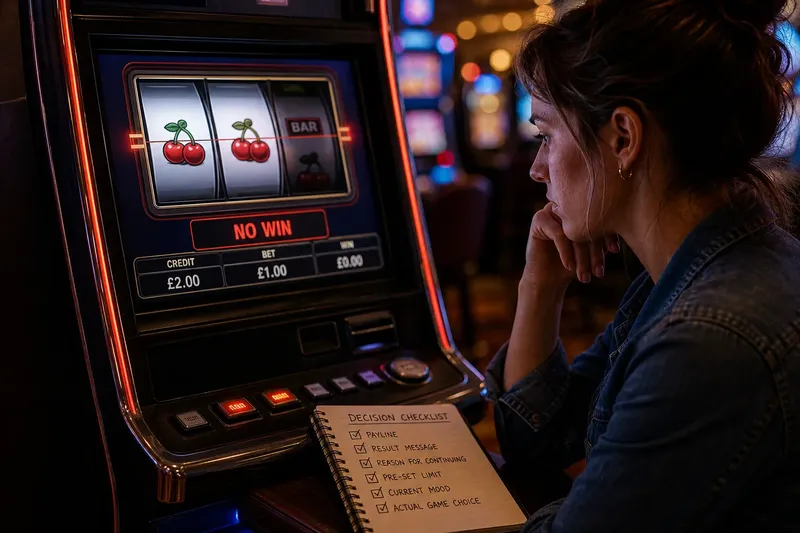
On a slot display, two matching symbols beside a third above or below a payline can resemble an incomplete combination. The eye supplies the missing piece, much as it recognises a familiar shape in a partly assembled jigsaw.
That impression is not a review of your skill. A near miss alone cannot tell you that you chose badly or that another play would complete the pattern. It is a visual arrangement; the rules determine whether the game recorded a win.
Read the result before interpreting the display
Sound cues, flashing borders and animation can make an almost-match feel momentous. Look for the game’s result message and paytable, then describe what they say in plain language: “Two symbols matched; the third did not; the game lists no win.”
Name your reaction separately: “I feel frustrated and want another spin.” That small distinction is like checking a shopping receipt before deciding what bright packaging led you to expect. The receipt tells you what was charged; the packaging does not change it.
Use a clear decision checklist after a near miss
Each check below leads to a specific next action. If the screen is unclear, use the game’s rules or ask staff for help rather than guessing from the animation.
- Payline: Observe whether the symbols match a listed winning combination on the relevant line. If they do not, treat the result as a loss; if you cannot tell, pause and read the paytable.
- Result message: Observe whether the game states that a prize was won. If it says no prize, accept that outcome; if the message is ambiguous, stop and check the rules before making another play.
- Reason for continuing: Notice whether you want another play only to complete or answer the near miss. If so, step away; if you had a separate reason before seeing the display, assess that reason on its own.
- Pre-set limit: Compare the next play with the limit you chose before starting. If it would cross the limit, stop; if you cannot recall the limit, pause and do not create a looser one in response to the display.
- Current mood: Notice whether frustration or preoccupation is taking over. If it is, take a break or end the session; if you feel settled, make the decision without treating the animation as a challenge.
- Actual game choice: Check whether the rules offer a choice that affects play. If they explain its effect, read them before choosing; if the near miss is only a visual effect, do not mistake it for a new option.
Say you begin a session with a hypothetical limit of £20 and decide in advance to stop if you feel frustrated. The paytable for your chosen slot lists a win only for three cherries on the centre line. After the display shows two cherries on that line and a third above it, the result message says “no win”; a chime plays, and you feel frustrated. You have already spent a hypothetical £18, so another £1 play would leave £1 within your stated limit, but it would be driven by wanting to complete the near miss. The result is a loss, and your pre-set mood condition has also been met: stop now, rather than treating the remaining £1 as a reason to continue.
Why does a near miss feel like a judgement?
Why does an almost-match invite self-blame?
An alternative outcome is easy to imagine: one symbol in another place, and the display would look different. That imagined change can feel like evidence about your choice, but the near miss itself does not show that a different choice would have won.
Can animation make a loss feel like a win?
Sound, motion and colour can give an almost-match a celebratory tone. Use the result message and paytable to identify what the game counted, rather than relying on the mood of its presentation.
What if the game offers choices?
Read what the rules say each available choice does, and distinguish an actual decision from a visual effect shown after a result. If the instructions are unclear, pause rather than infer what another choice might have changed.
What if near misses leave me blaming myself?
Pause and describe the observable result without turning it into a judgement about your ability. If gambling is becoming difficult to control or causing harm, contact a qualified gambling-support service or health professional.
Let the rules, not the animation, frame the next move
A casino near miss can dress a loss in the shape of an unfinished story. The paytable and result message clarify what happened; your own reasons and limits—not the chime or flashing symbols—can guide whether to continue.
If you are unsure of the result or your decision, pausing is a complete choice. You do not have to resolve the pattern on screen, and you can leave the game without turning its presentation into a judgement about yourself.